Created in 1845 by BERNARDINO BRANCA, the recipe still remains a closely guarded family secret.
The way these ingredients are processed and blended is what makes the product so unique, so impossible to reproduce
What makes it so special?
A family secret FERNET-BRANCA’S SECRET FORMULA, passed down from father to son in the Branca family, has guaranteed consistently high quality
A rich recipe Flowers, herbs, roots and plants, extracts and teas are blended into a special mixture to produce the beneficial properties of the product, which also contains a low amount of sugar. The 27 HERBS it contains come from different countries across four continents: South Africa, China, France, India, Sri Lanka, Italy and Argentina, just to name a few.
A long process Fernet-Branca ages for at least ONE YEAR IN OAK BARRELS.
The secret recipe
Colours, aromas, flavours and … properties! The Fernet-Branca recipe is a special journey through the 27 herbs, roots and spices of its special secret and one of a kind formula.
Every single herb represents a distinct universe, experience and discovery.
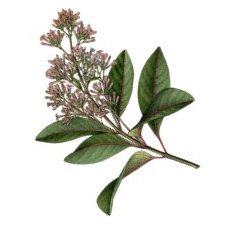
CHINA (Cinchona officinale)
Its original name is Cinchona and derives from the name of the Countess of Chinchón; indeed, according to tradition Chinchón is the city that first discovered the hitherto secret qualities of the bark of this herb that can even be used against malaria. A few drops of its extract suffice can bring benefits to the digestive system and it also has anti-inflammatory and antipyretic properties.
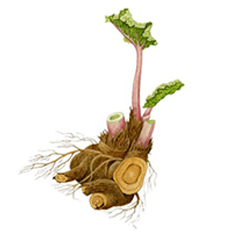
RHUBARB (Rheum officinale)
Rhubarb is a herb that is considered to have come from China and Tibet but grows spontaneously and perennially in Europe and Asia, where, since ancient times, it was deemed perfect for ornamental and medicinal purposes. In natural medicine it is still considered an excellent remedy for improving digestive functions and in the kitchen it is normally used to produce amaros, liqueurs and digestifs, but can also be used for marmalades, jams, sweets and infusions.
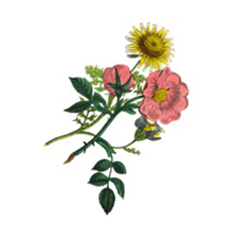
CAMOMILE (Matricaria chamomilla L.)
In Greek it is called Khamaìmelon, which means apple of the earth, or small apple: there is nothing sweeter than the name and aroma of this plant from Europe and Asia. The ancient Egyptians consider it to be one of the most precious medicinal herbs: indeed, in Egyptian mythology, the Sun God was fond of chamomile flowers and traces of this precious ingredient were even found on the dressings of some mummies. Camomile is full of sedative and calming properties and lends a gentle warmth to the flavour of Fernet-Branca’s amaro.
CINNAMON (Cinnamomum)
Cinnamon was mentioned in the Book of Exodus in the Old Testament and appears in ancient Chinese herbariums dating back to 2700 B.C.. It has been used in Europe since ancient times, especially for food purposes. Its dominant feature is its aroma that helps to make the bitter flavour of the other medicinal herbs less intense. Full of antioxidants which contrast free radicals and slow down the ageing of cells, cinnamon is especially a powerful stimulant, aphrodisiac and soothing agent.
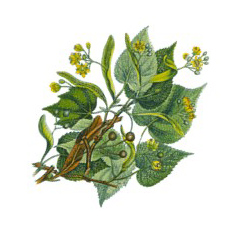
LINDEN (Tiliae flos)
The Tilia tomentosa factories belongs to the Tiliaceae family and thanks to the substances contained in its leaves and flowers, it has proven to be very useful against insomnia, nervousness and general disturbances of the airways. Precisely because of its antihypertensive properties it is a Bach Flowers and is frequently used against anxiety, tachycardia and stress. It is considered a sacred herb by Nordic populations, while the Greeks dedicated it to Aphrodite and various traditions have connected to conjugal love and the female universe.
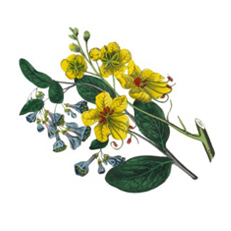
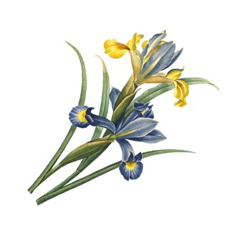
IRIS (Iris)
As many as two hundred plants from the Iridaceae family bear its name, which means rainbow in Greek. On the basis of its colour and the area in the world, irises have acquired symbolic meanings as is often the case with roses: for example a blue or dark violet iris can be synonymous with nobility while a yellow iris represents passion. Extracts of the plant’s roots, stems and seeds are used for medicinal purposes because of its antiseptic, depurative and toning properties.
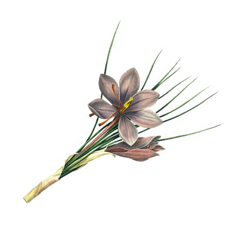
SAFFRON (Crocus sativu)
Its name derives from the Arabic word za῾farān and it is a plant cultivated in Asia Minor and many other countries of the Mediterranean basin. In ancient times it was though to have antispastic and sedative properties and, in Greek mythology, it was considered to improve sexual performance and the sensations associated with eros, so much so that Zeus was said to lie on a bed of saffron during his romantic encounters. Full of Vitamin A, it is excellent for contrasting the loss of sight and is an energy booster that can have a positive impact on mood.
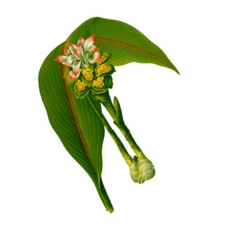
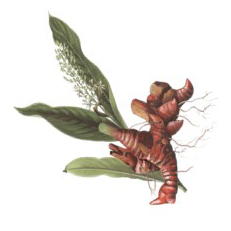
ZEDOARY (Curcuma zedoaria)
Zedoary is a perennial herbaceous plant that belongs to the Zingiberaceae family. Its ideal habitat are the rain forests of south-east Asia. It is produced mainly in India and is considered a good digestive agent, stimulant, cicatrizant and anti-inflammatory. An excellent flavouring, like curcuma, which it is a variant of, it can also used as a condiment. It has a similar aroma to ginger and a camphorated flavour.
GALINGALE (Alpinia officinarum)
Its scientific name is Alpinia galanga and it is also known as Thai Ginger because it has the same shape, pungent taste and depurative properties. It was first introduced to Europe during the Middle Ages and was considered magical because it offered protection from evil spirits and improved men’s virility. It was one of the ingredients in Hippocras, a spicy liqueur wine that was very popular with the aristocrats during the Middle Ages.
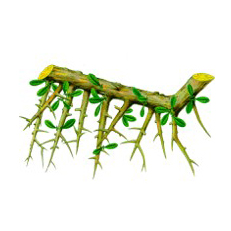
MYRRH (Commiphora)
Its name comes from the Semitic word Murr, which means bitter. It was used for embalming and has been used since ancient times as a symbol of sacrifice. Myrrh, which is popularly known to be one of the gifts the Three Wise Men brought to baby Jesus, is an aromatic gum resin that is extracted from the plant of the Commiphora genus, from the Burseraceae family, which is very common in Somalia, Ethiopia and the Arabian Peninsula. It has been famous since time immemorial for it calming, antiseptic and antibacterial properties.
Tasting
The discovery of Fernet-Branca is an adventurous journey amidst flavours and emotions. It is a unique journey that is bound to establish a new and intense relationship that will last a lifetime.
Three sips to get to know each other and be together forever.
Take the FIRST SIP and pause a few seconds to become familiar with the decisive BITTER NOTE of colombo, myrrh, and the unmistakable character of gentian.
The SECOND SIP will reveal the distinct SPICY FLAVORS of zedoary (from the ginger family) and the full flavor of chamomile.
The OVERALL RICHNESS of Fernet-Branca is not revealed until the third and FINAL SIP when the balanced bitter aftertaste prevails over the spicy tones of saffron.